Our trip to Muscat was a delightful adventure through the heart of Oman’s culture and history. Each day brought new experiences that left us enchanted by the city’s vibe and authenticity. It is very easy to love Muscat and feel welcomed here! You can see and experience a lot even if you have only a couple of days to spend here.
Royal Opera House – Music’s Majesty
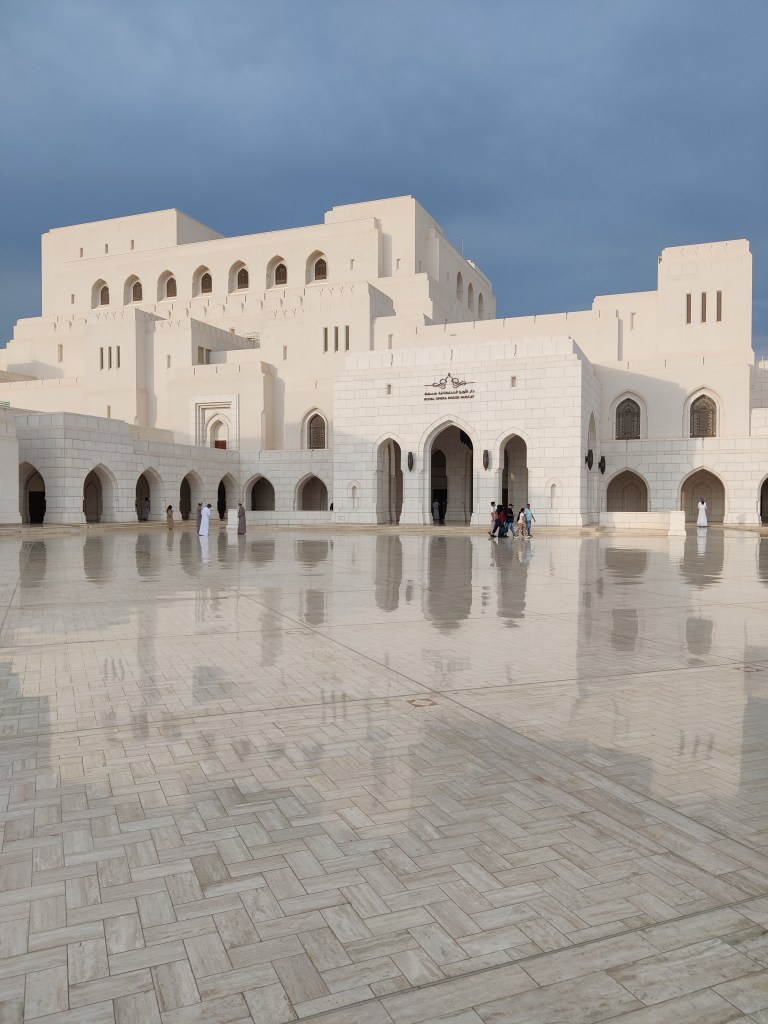
Our first stop was the Royal Opera House, a stunning architectural gem. The elegant white complex designed by Wimberly, Allison, Tong & Goo, and opened in 2011, caught the afternoon light beautifully. Although we admired it only from the outside, we could imagine the magic of the performances held inside, adding to Muscat’s vibrant cultural scene.
Sultan Qaboos Grand Mosque and Old Muscat
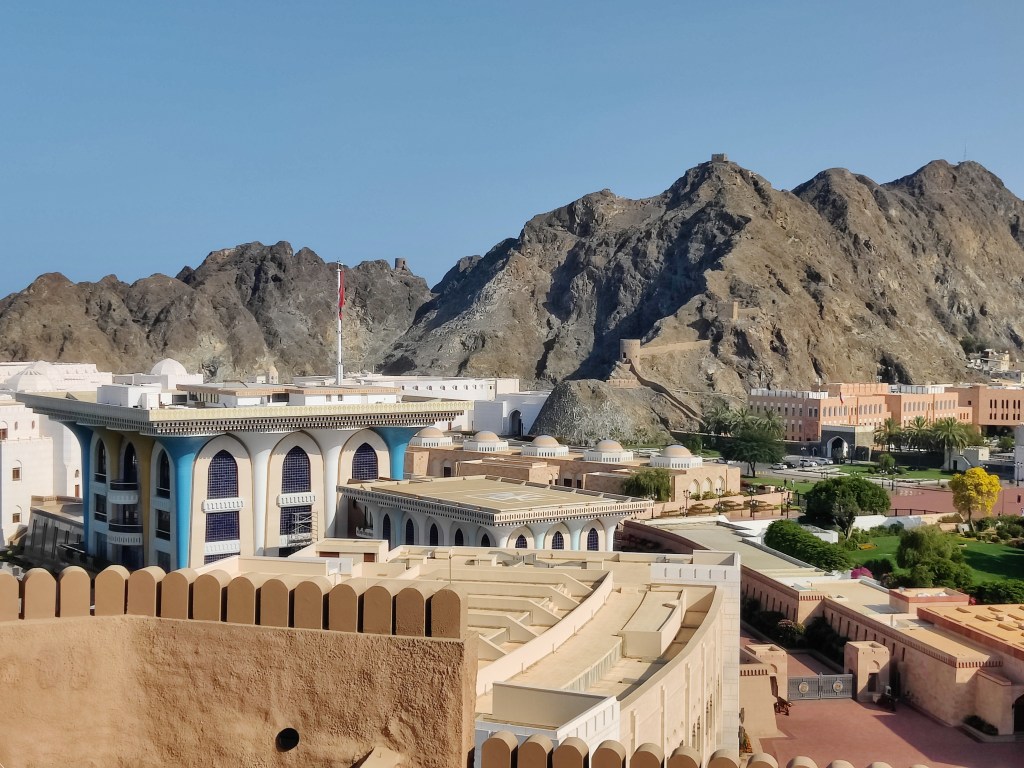
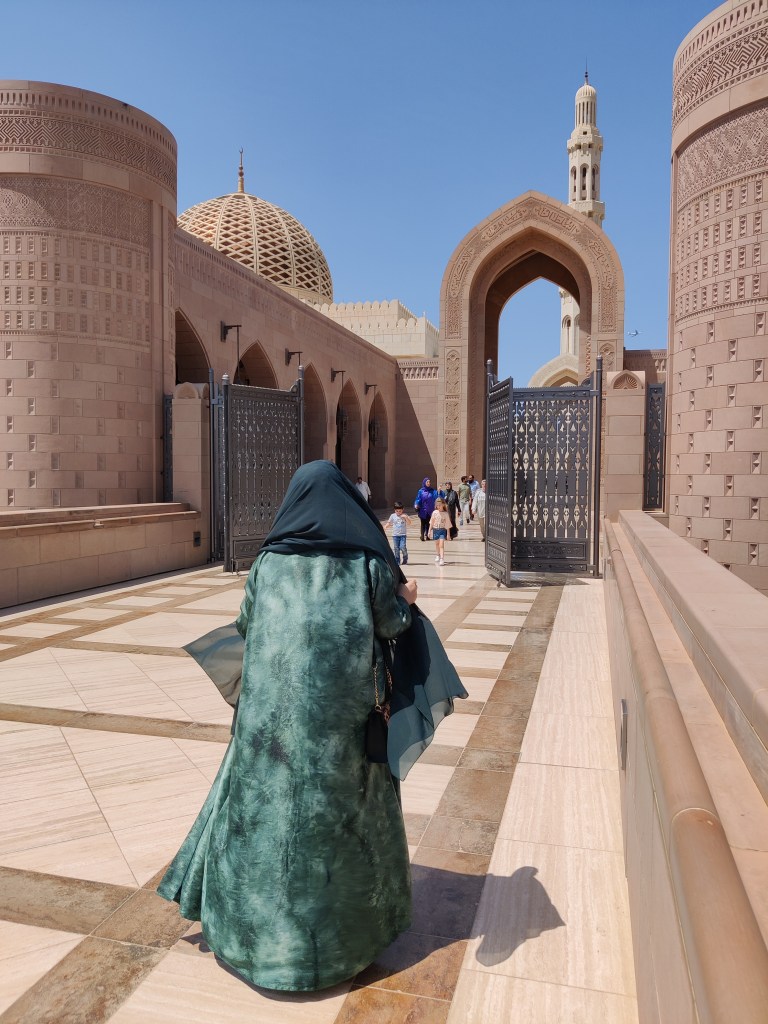
Next morning we visited the Sultan Qaboos Grand Mosque, a striking example of Islamic architecture. It was opened in 2001 and is the largest mosque in Oman that can fit 20 000 people. While we only saw it from the outside, its intricate details were impressive. We then explored Old Muscat, admiring the Sultan’s Palace called Al Alam and other administrative buildings that reflect Oman’s rich heritage. Apart from official buildings, this part of the city has local old residential areas with charming white houses and cute little mosques. We would have stayed there to explore but we needed to continue our visit to the next location. This is definitely the area that we will be discovering in more detail on our next trip to Muscat!
Al Mirani Fort and Riyam Park
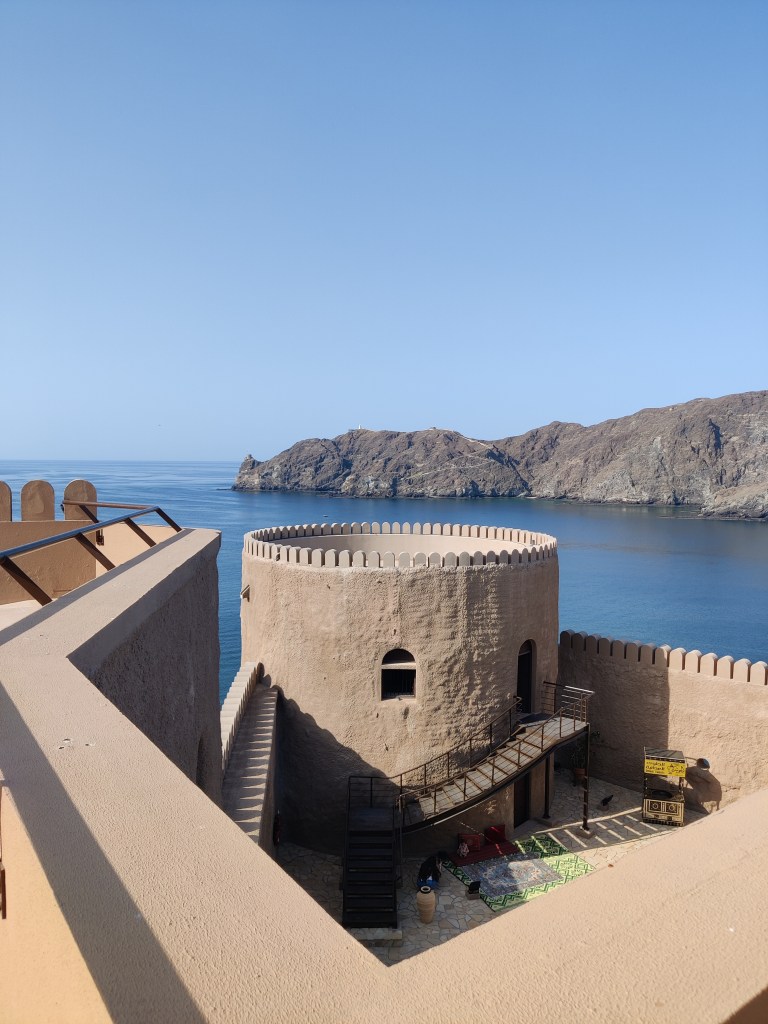
A highlight of our trip was Al Mirani Fort, steeped in history. As we wandered through its walls, we imagined the stories of the past. The fort is built on the rocky mountain that offers unique views to all directions and other forts nearby. Something to explore for next time! The fort existed prior to the Portuguese invasion and was later rebuilt by the Portuguese in 1587. The fort’s Portuguese chapel added to its allure, and it looked like something you would see in Greek islands like Santorini.
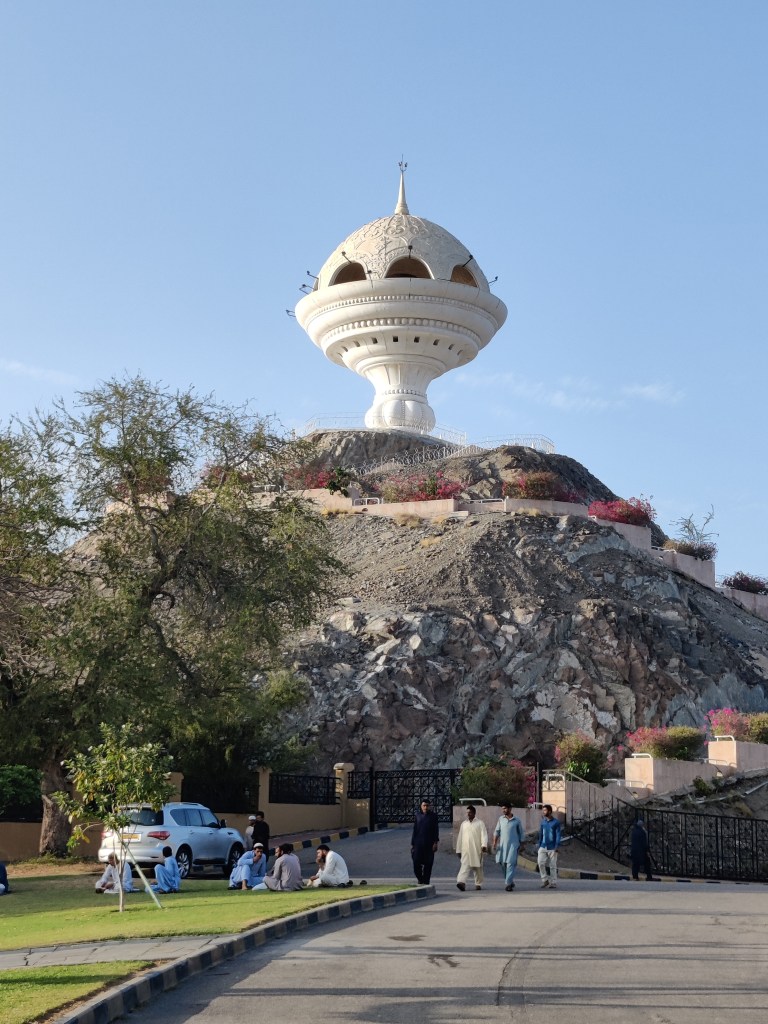
We also visited Riyam Park, where we witnessed the festive Eid Celebrations. The joyful atmosphere gave us a glimpse into Omani culture and laid back friendly atmosphere. The Riyam Censer (incense burner statue) was an impressive sight built on the mountain! It is a reminder of Oman being a part of an ancient important Incense Route more than 2 000 years ago.
Indulging in Omani Cuisine at Mutrah Corniche
After a day of exploration, we treated ourselves to authentic Omani cuisine at one of the restaurants of Mutrah Corniche. The flavors were a delight, but we were surprised on the less spiciness of food, compared to the Emirati cuisine for example. Or maybe we just tasted the dishes that were not spicy? Definitely something to explore in full detail on our next trip!
Authentic Mutrah Souk: A Shopper’s Must-go location
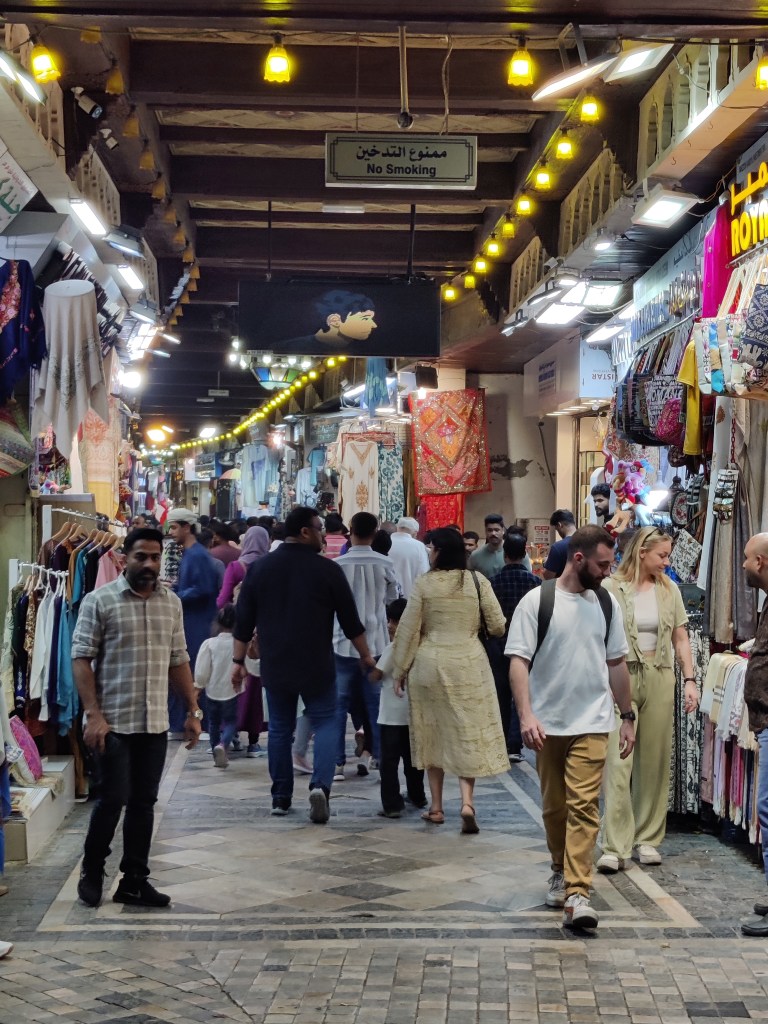
Our final stop was Mutrah Souk, a bustling and what’s most important, the authentic market place. Here, we found treasures like antique rose water dispensers and a dallah pot for our Arabian majlis. We also picked up traditional oil perfumes, including the famous frankincense, which Oman has been known for over 2000 years.
Our journey through Muscat was a joyous deep dive into Omani culture and heritage. Each moment was meaningful, leaving us with memories we’ll always cherish. Muscat has truly captured our hearts, and we look forward to returning to uncover more of its enchanting beauty.
Want to know more?
Muscat is the capital and largest city of Oman, with a rich history as a trading port and a vibrant economy. It is known for its low-lying white buildings and the port-district of Mutrah. The city is located on the Arabian Sea along the Gulf of Oman and is surrounded by the Hajar Mountains. For more details, you can visit the Wikipedia page on Muscat.

 Voyagerista