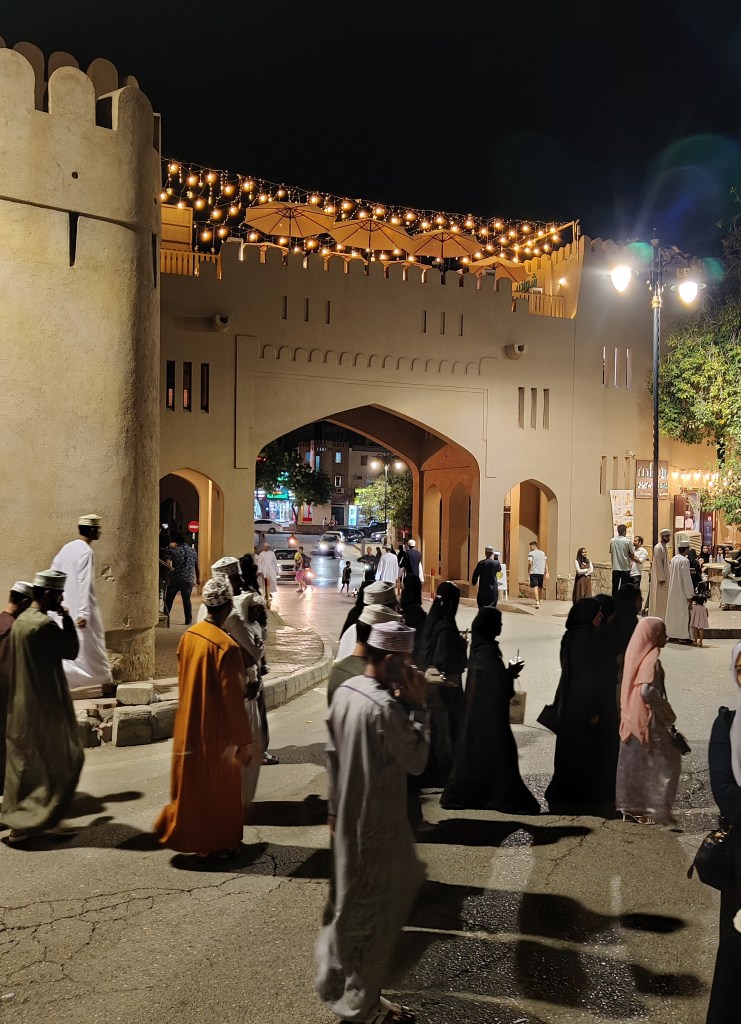
Entering Nizwa through its ancient gate felt like stepping back in time, where history and tradition are still very much alive. This ancient oasis town in Oman is rich in culture, heritage, and warm hospitality.
Nizwa, one of Oman’s oldest cities, has a rich history that dates back over a thousand years. It was once the capital of Oman and an important center for trade, religion, and culture. The city has been a center of power and politics for centuries, serving as the capital during the sixth and seventh centuries and as the seat of the Imam, the spiritual leader of Oman.
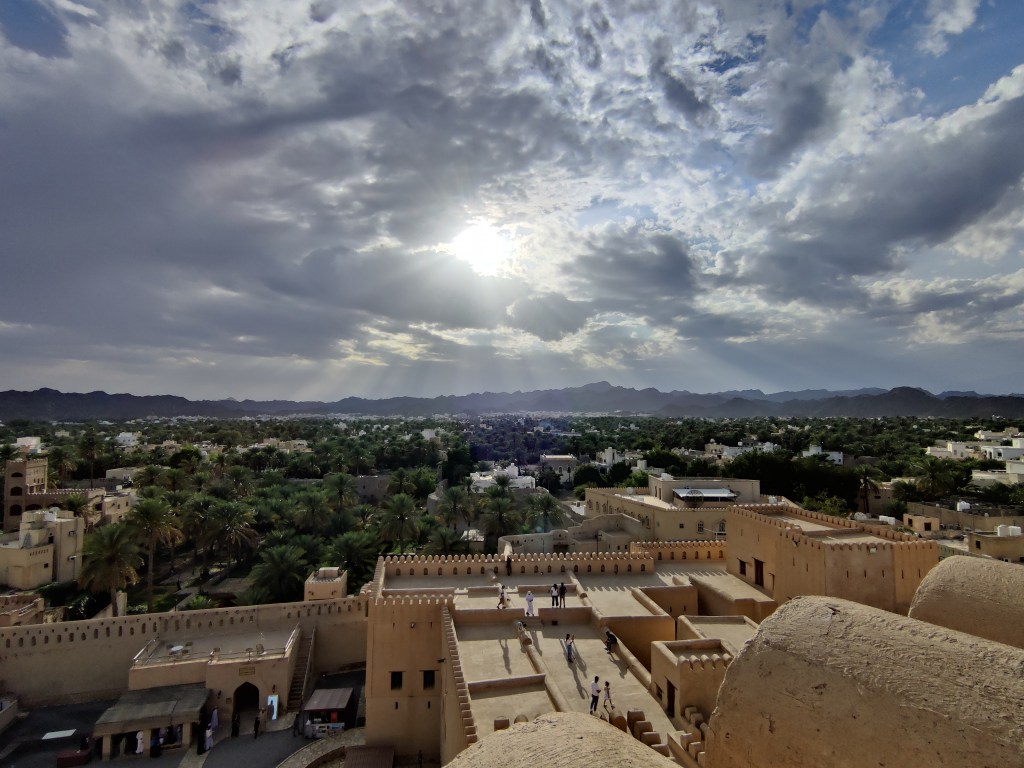
Our first stop was Nizwa Fort, an impressive structure that showcases Omani architecture and history. Built in the 17th century by Imam Sultan bin Saif Al Ya’arubi, Nizwa Fort is renowned for its massive circular tower and thick, sturdy walls. It was strategically constructed to protect the city and control the surrounding area. Inside, we explored its narrow corridors, discovering the fort’s role in defending the city and its people. In the past, intruders were kept away by creative ways such as pouring boiling date juice on them through small hatches called “murder-holes”!

Connected to the fort is the Nizwa Castle, an earlier structure built by Imam Salt bin Malik Al Kharusi in the early 9th century. Situated next to an old mosque, it served a multifaceted purpose. Within its walls were rooms for visiting scholars, a military chamber, the imam’s personal library, spaces for coffee preparation, and prayer chambers where the imam held audiences with the public. As we wandered through its courtyards and rooms, we were transported back in time, imagining life within its walls centuries ago.

One of the highlights of our visit was experiencing the authentic Eid celebrations in the courtyard of Nizwa Castle. The atmosphere was vibrant, with villagers dressed in their finest attire, gathering with their families to celebrate. Traditional dance performances, horse riding, and other activities for kids and adults added to the festive spirit.
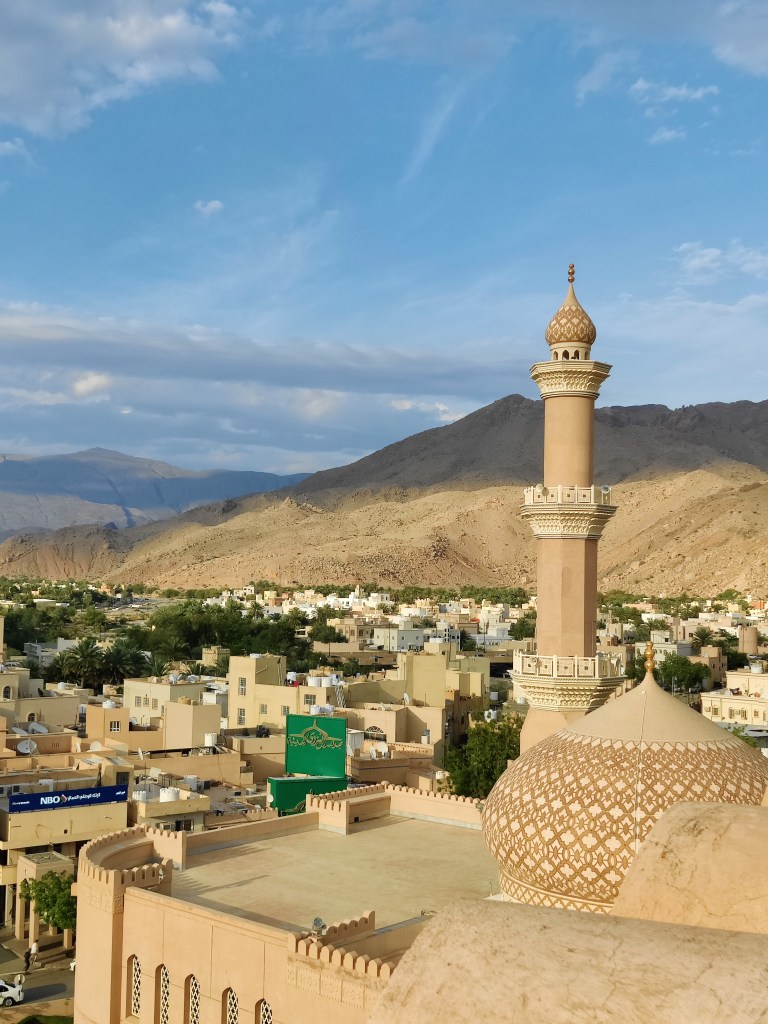
After the celebrations, we explored the museum in Nizwa Castle, which provided a fascinating insight into the history and traditions of Oman, and Nizwa in particular. The museum’s exhibits offered a deeper understanding of the rich cultural heritage of the region.
Behind the castle, we discovered a lovely garden with a falaj system, a traditional Omani irrigation system. The garden featured a petting zoo, swings hanging from palm trees, and an Omani halwa station, adding to the charm of the place.
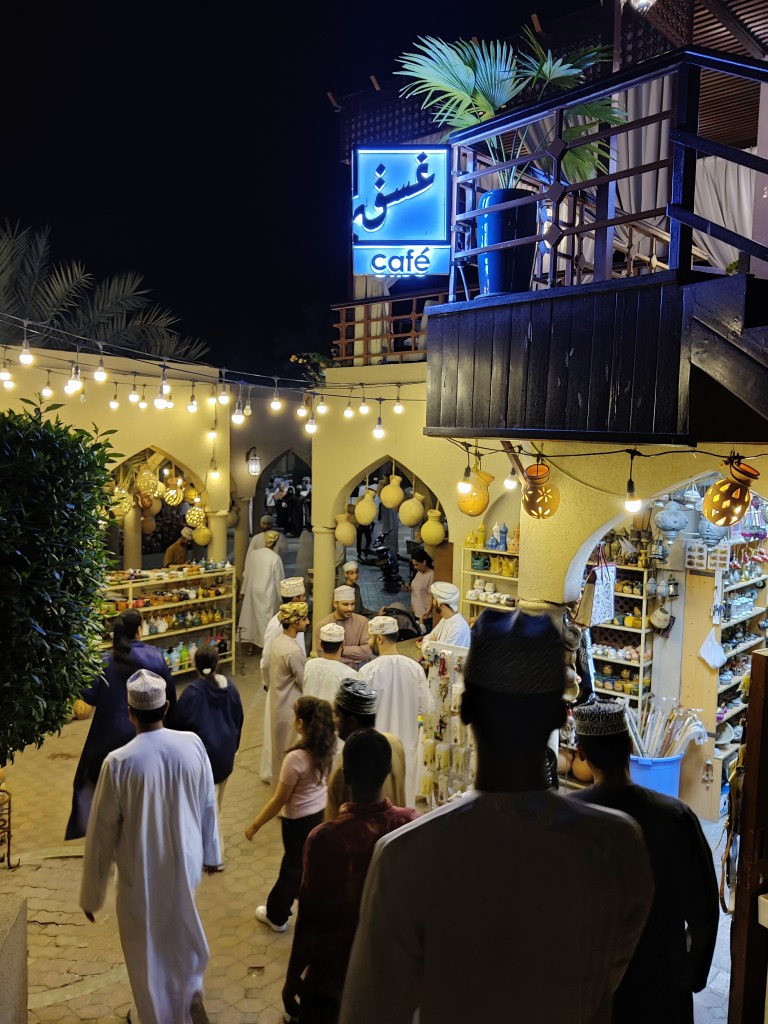
At the end of the day, we visited Nizwa Souk, where we purchased books about Oman and some souvenirs. As we left Nizwa, we were struck by the warmth and friendliness of its people. The city’s rich history and cultural heritage are indeed remarkable, but it is the genuine hospitality of its inhabitants that truly makes Nizwa a special place to visit.
Want to know more?
Nizwa is one of the oldest cities in Oman and was historically a center of trade, religion, education, and art. The city is strategically located at the crossroads of routes linking the interior with Muscat and the lower reaches of Dhofar, making it a diverse and prosperous place with numerous agricultural, historical, and recreational aspects. Nizwa is the home of Nizwa Fort, Oman’s most visited national monument, and Nizwa Souk, a traditional vibrant marketplace offering a wide variety of goods, including traditional Omani handicrafts, silver jewelry, and pottery. For more details, you can visit the Wikipedia page on Nizwa.

 Voyagerista