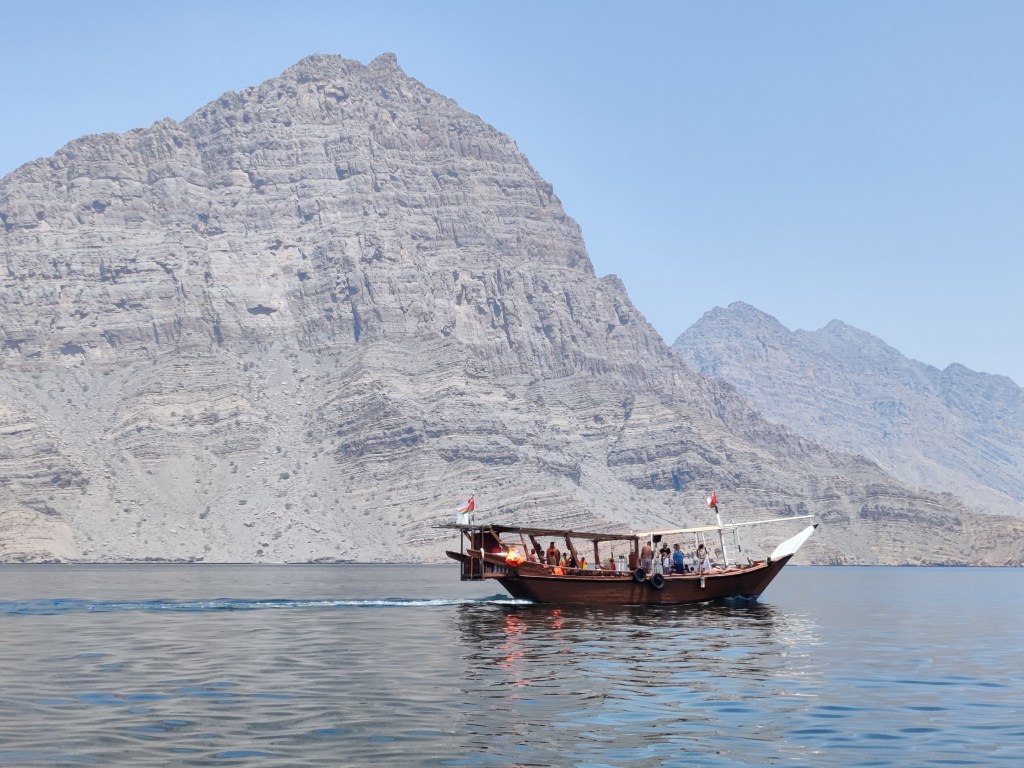
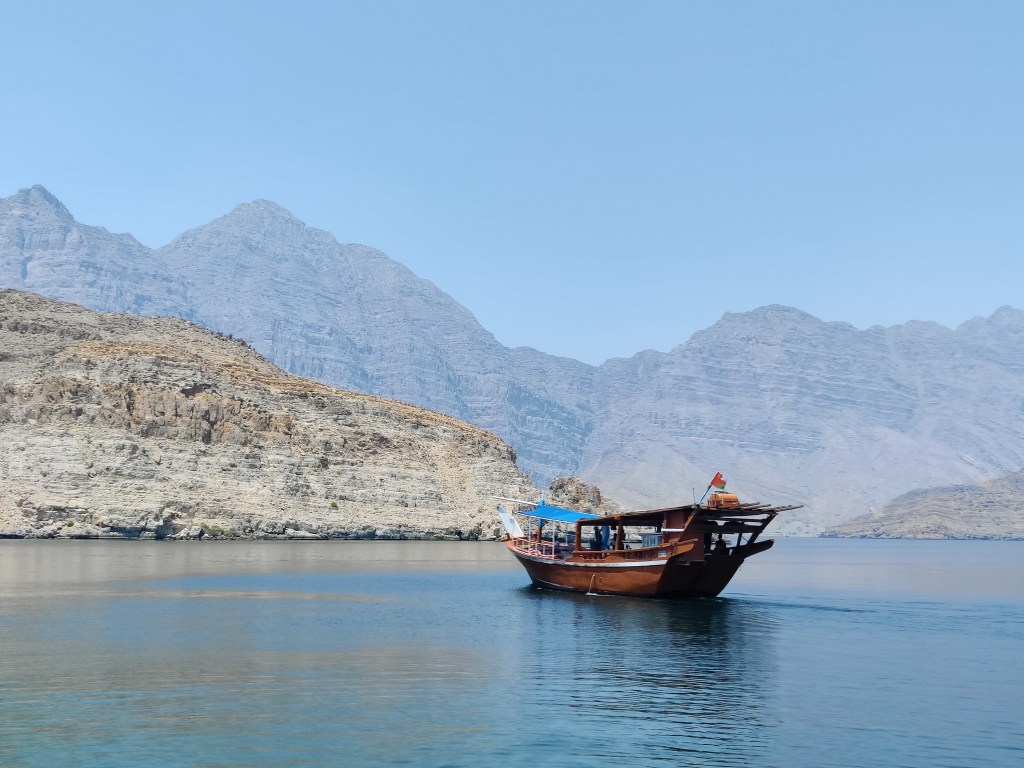
Our day trip to Musandam, Oman, was a mind-blowing adventure filled with stunning landscapes, vibrant wildlife, and insights into the region’s geological history. When we departed on a dhow boat cruise from Khasab town’s port, we were unaware that we are about to witness a spectacular blend of natural beauty and geological wonders.
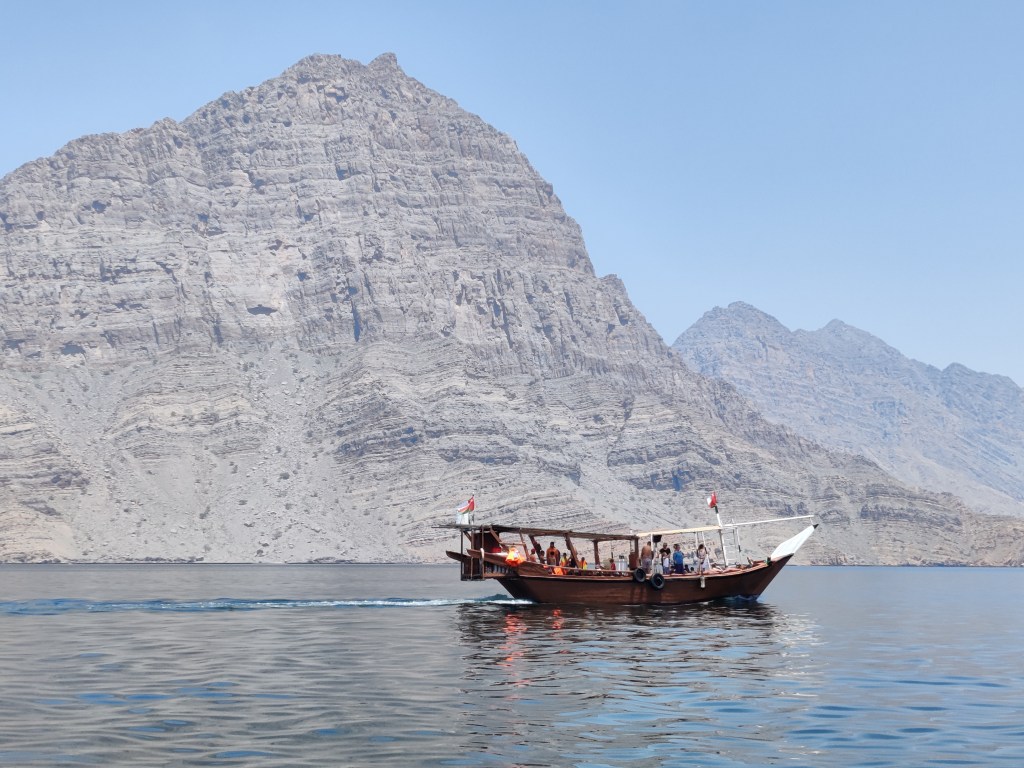
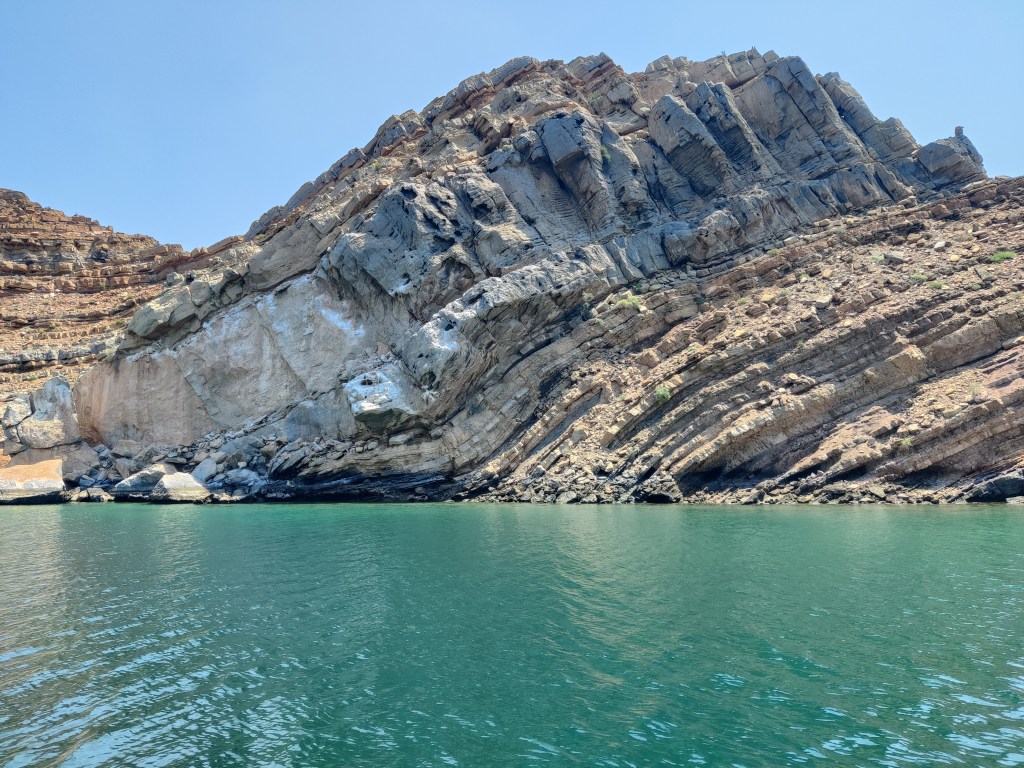
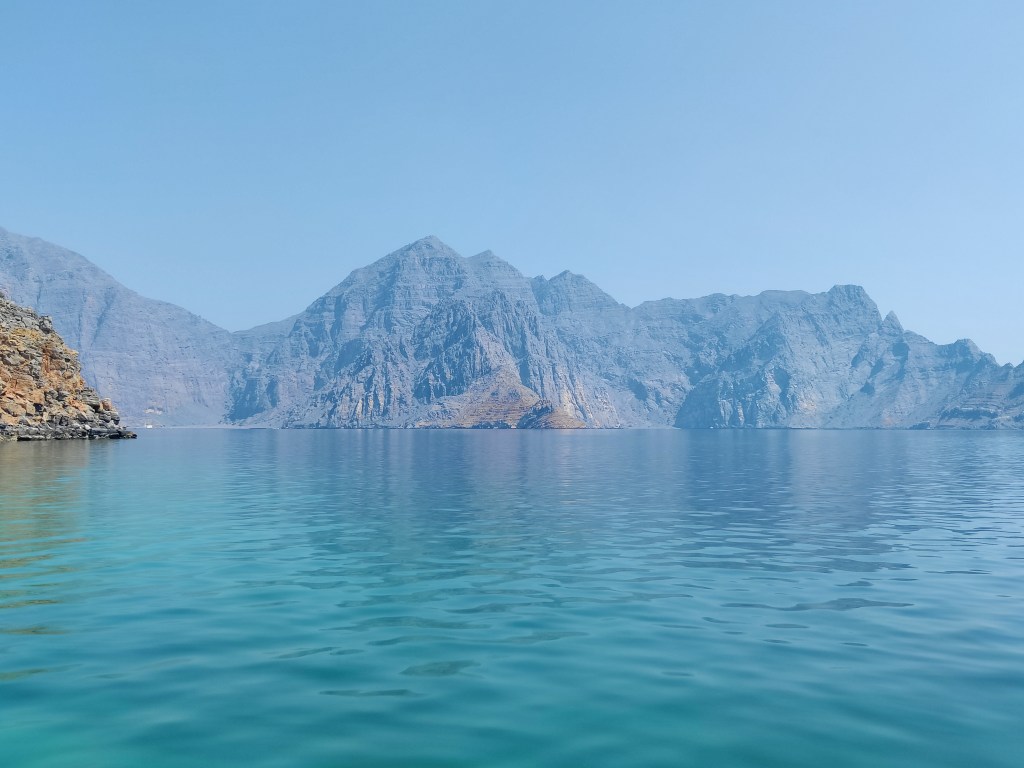
Musandam’s fjords and peninsula were formed through a combination of geological processes over millions of years. The region is part of the larger Arabian Plate, which has been slowly moving northward, colliding with the Eurasian Plate. This collision has resulted in intense folding and faulting, leading to the uplift of the Hajar Mountains, which dominate the landscape of Musandam.
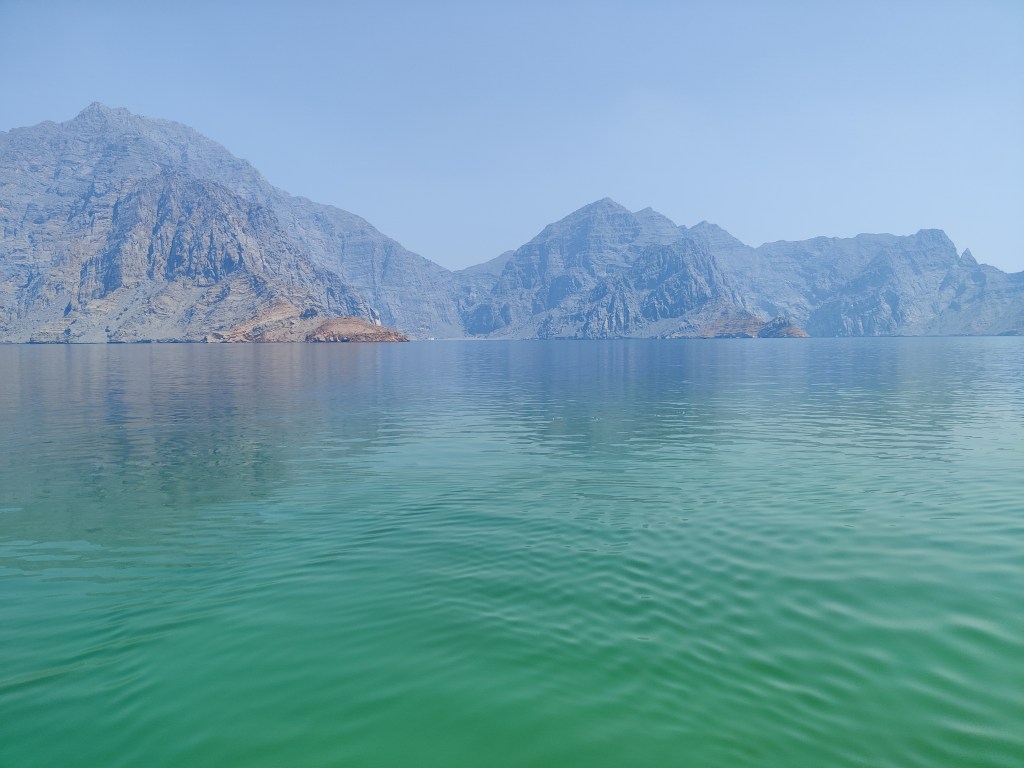
The rugged mountains of Musandam are primarily composed of sedimentary rock, including limestone and dolomite with traces of iron and magnesium. Over time, the action of water and wind has eroded these rocks, carving out deep valleys that were later flooded by rising sea levels. This combination of tectonic activity and erosion has resulted in the formation of the spectacular fjords of Musandam.
Our journey into the heart of Khor Sham, a 16 km long fjord known for its crystal-clear waters, offered us a glimpse into the region’s geological past. The fjord’s depth can vary, but some parts are several hundred meters deep, a clear evidence to the steepness of the surrounding mountains and the extent of erosion that has taken place over time.
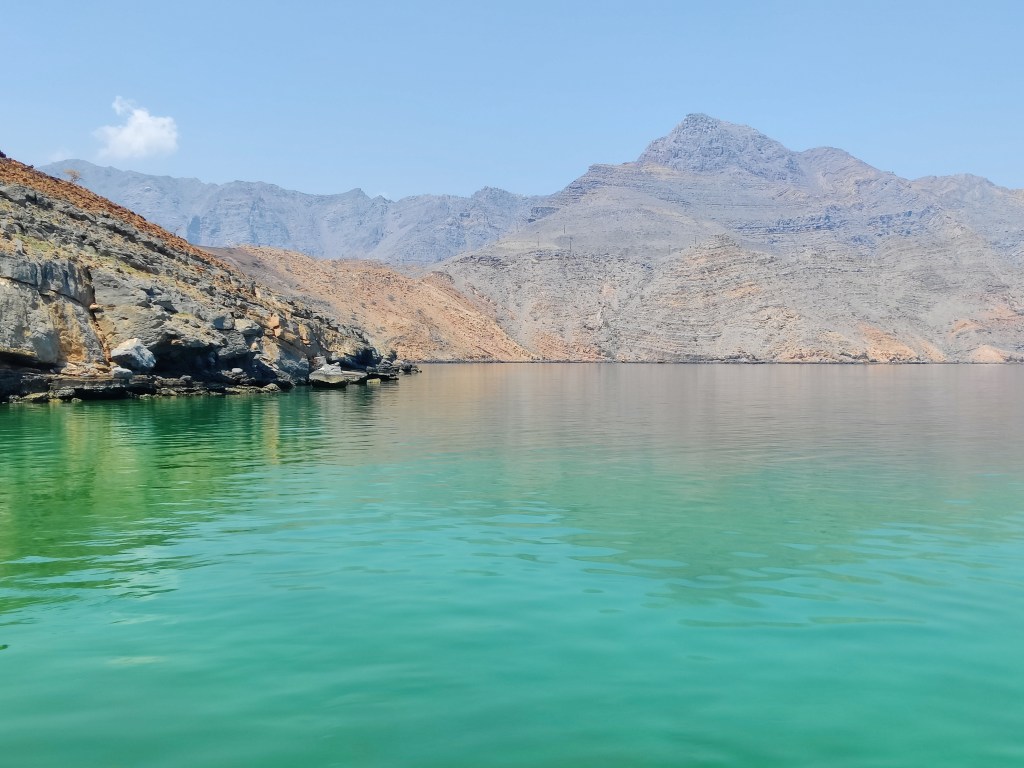
Along the way, we passed by charming villages like Nadifi, Qanaha, and Maqlab, each offering a glimpse into the traditional Omani way of life. We also passed the Telegraph Island, where the British built a telegraph station in 1864, serving as a crucial link in the telegraph connection between England and India.
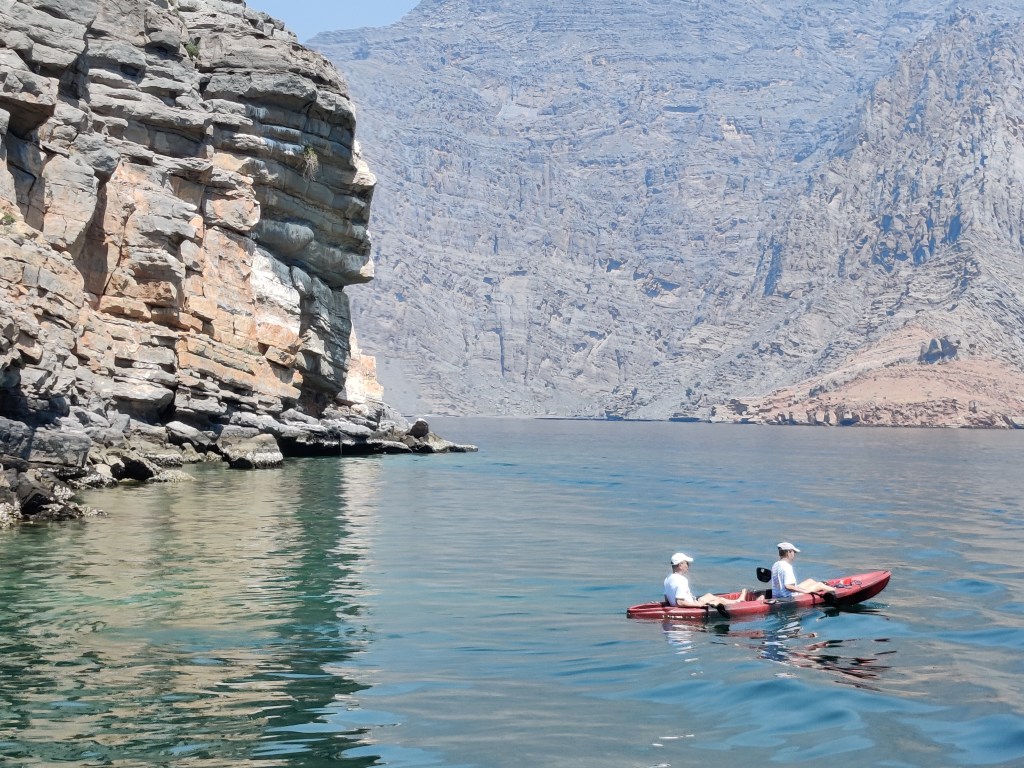
Our farthest stop at the end of the fjord was Seebi island, a tranquil spot with calm, crystal-clear waters of stunning colors. Here, we had the opportunity to swim and snorkel, immersing ourselves in the rich underwater world of Musandam. During the day we were delighted to encounter around 15 playful dolphins, which chased our boat and circled around us, providing a truly magical experience. We also saw a graceful sting ray and exotic colorful fish along the way.
The vibrant wildlife and stunning landscapes were complemented by the amazing colors of the water, ranging from bright green to blue and turquoise, with reflections of the nearby Hajar mountains adding shades of orange and pink as the mountains contain traces of iron and magnesium.
Another fascinating aspect of our journey was witnessing the life of the local population. These fishermen depend solely on fast motorboat connections to the mainland, as the fjord villages are not connected by roads. We learned that all the children from these villages travel to school in Khasab by boat on Sundays and return home on Wednesdays to be with their families. Additionally, all families in the area have two houses—one in the fjord and one in Khasab—because if it rains, it is impossible to stay in the fjord village.
Our day in Musandam was truly unforgettable, offering us a glimpse into the natural beauty, rich wildlife, and unique geological history of this extraordinary region. It was a journey through time and nature, reminding us of the Earth’s incredible diversity and the wonders that await those who venture out to explore it.
Want to know more?
Musandam, Oman, is a strategically located governorate of Oman, situated on the Musandam Peninsula. It juts into the Strait of Hormuz, providing partial control over this strategic strait, shared with Iran. The area has an area of 1,800 km2 and a population of 49,062. Access to the peninsula was formerly difficult, but the Shinas fast ferry service between Muscat and Musandam was launched in 2008 to alleviate this problem. The governorate is accessible by land only from the United Arab Emirates. The area was autonomous under indigenous control but became part of Oman after a British invasion in 1971.
For more detailed information, you can visit the Wikipedia page on Musandam Governorate.

 Voyagerista