Nestled in the heart of Al Ain, the Al Ain Oasis is a living proof of the ingenuity and resilience of the region’s ancient inhabitants. Spanning over 3,000 acres, this lush oasis offers a glimpse of history, culture, and natural beauty of this region. In many ways the history of Al Ain Oasis reflects the history of Emirati people as a whole. The oasis opened to visitors in 2016, five years after it became the first UNESCO World Heritage site in the UAE in 2011.
A Haven of Biodiversity
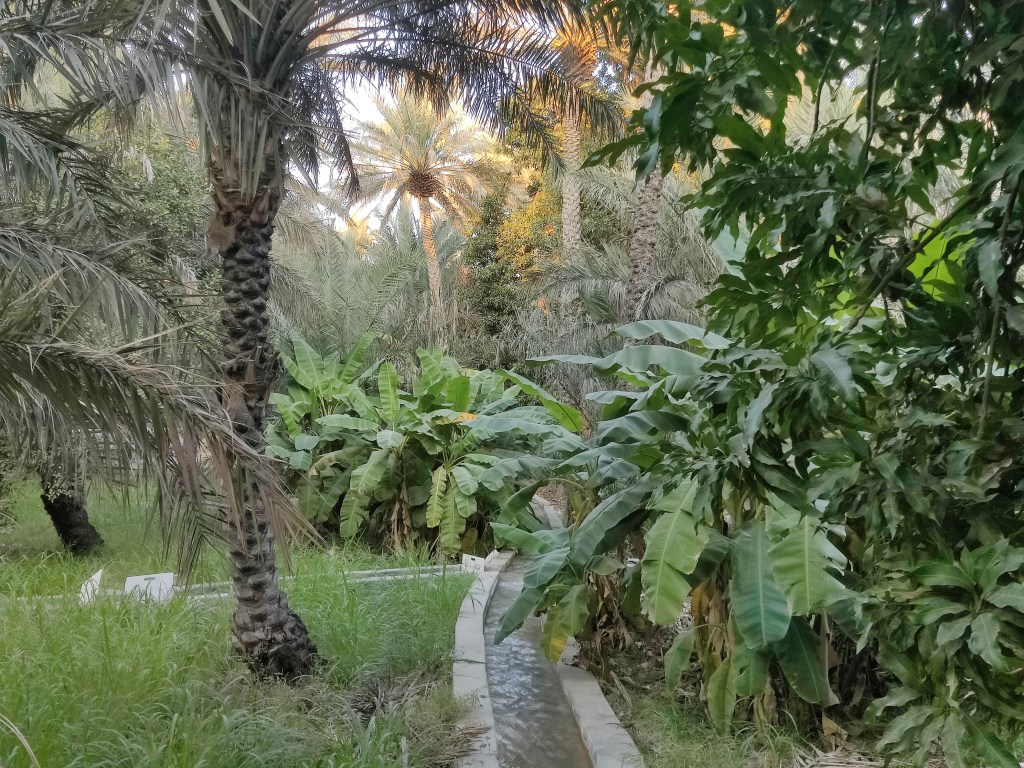
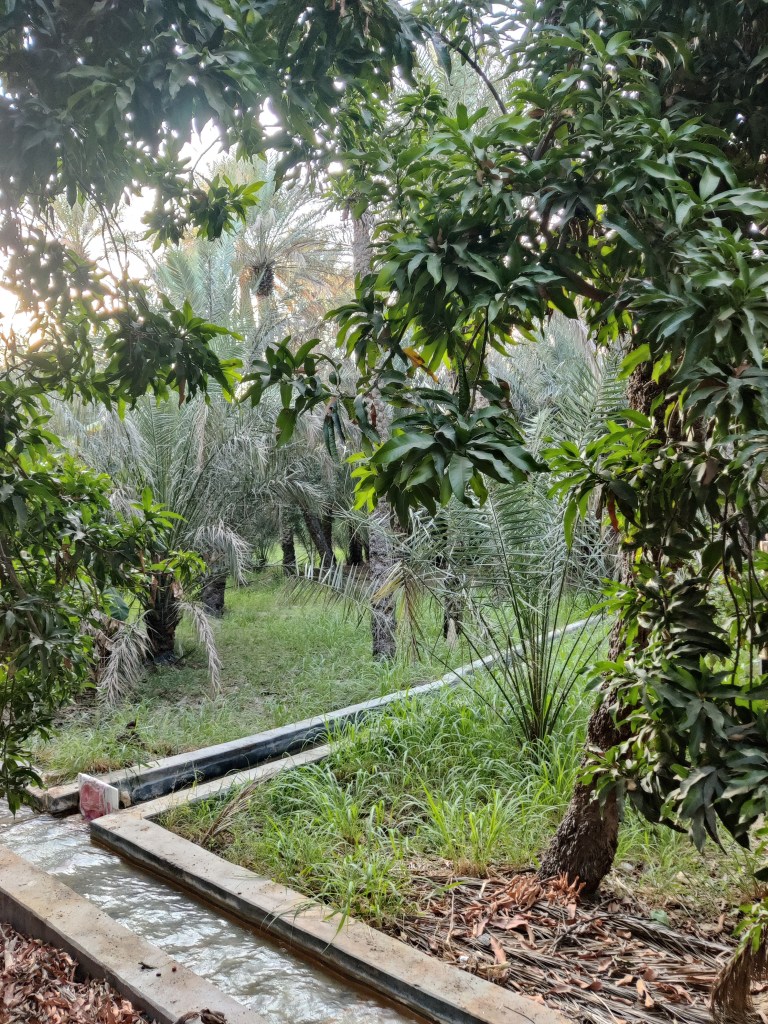
The oasis contains more than 147 000 date palms up to 100 different varieties and two falaj systems called Al Aini and Al Dawoodi. They provide water to separate parts of the oasis but both originate some distance away to the south-east, in the direction of the Hajar Mountains.
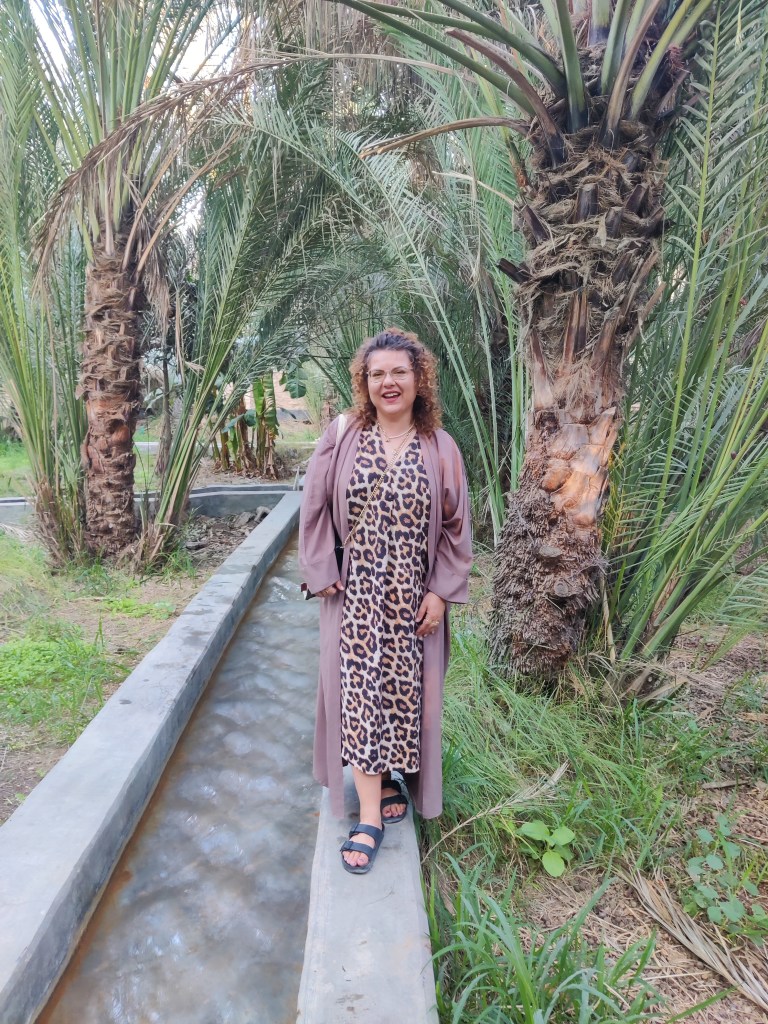
The Al Ain Oasis is home to a remarkable variety of flora, including date palms, mango trees, citrus fruits, banana, fig, jujube, sugar cane, medicinal herbs and surprisingly even wheat. The oasis’s fertile soil and sustainable water supply support a rich ecosystem, attracting numerous bird species and small mammals. Walking through the oasis, you can experience the sights and smells of a thriving agricultural landscape, surrounded by the tranquility of nature.
Exploring the oasis is easy
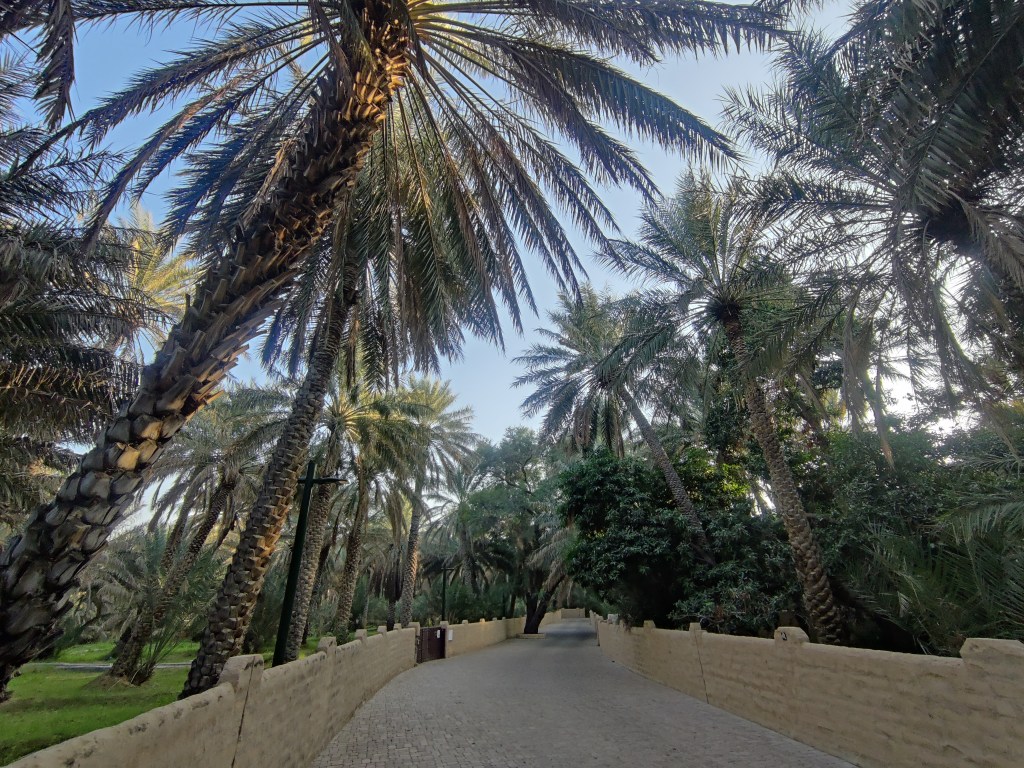
The easiest way to explore Al Ain Oasis is by taking a walk inside, the pathways are clean and spacious. The oasis is divided into several plots, each managed by local farmers who continue to practice traditional agricultural methods. Walking or cycling through the oasis provides a unique opportunity to interact with the local community and learn about their way of life. Fun fact: the natural shade and light filtered through the leaves of palm trees of Al Ain Oasis served as an inspiration to the architect Jean Nouvel in the creation of the concept of the huge dome at museum complex Louvre Abu Dhabi. Read more on Louvre Abu Dhabi in my other blog post.
The Ingenious Falaj System
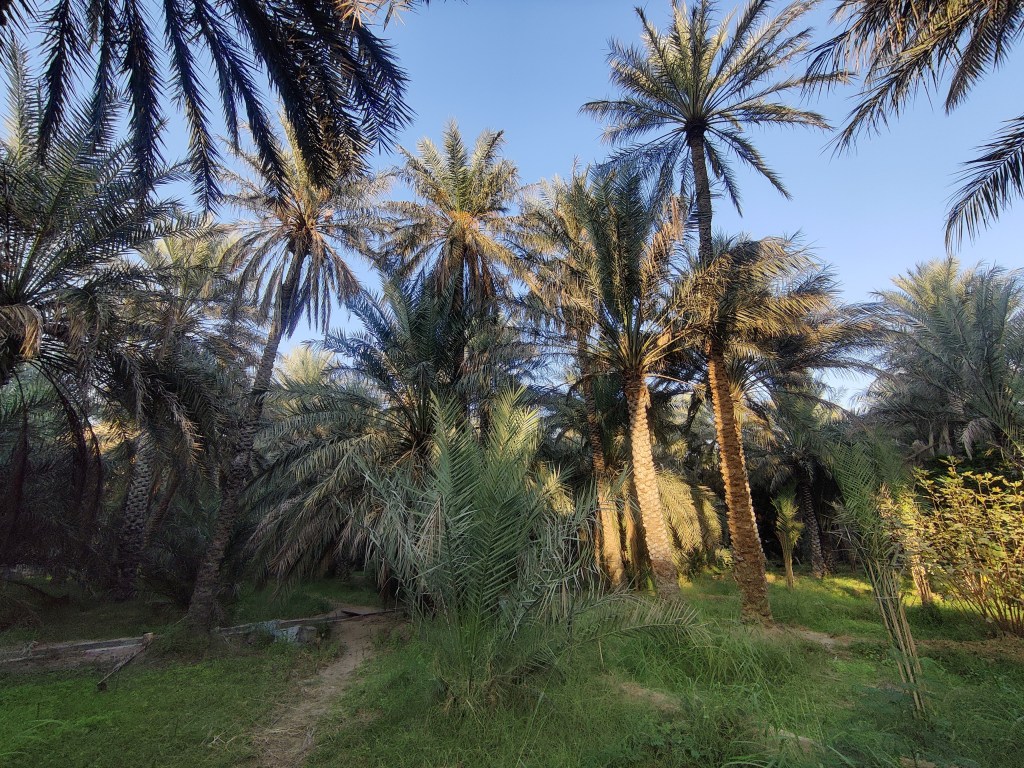
Central to the oasis’s success is the falaj system, an ancient irrigation method that has been used for thousands of years. The falaj system of Al Ain Oasis dates from 1 000 BCE. The system consists of a series of underground tunnels that transport water from the nearby mountains to the oasis, providing a reliable water supply for agriculture. The falaj system is a solid proof of the ingenuity of the region’s early inhabitants and continues to be used today.

Visiting the Al Ain Oasis
How can you visit Al Ain Oasis? The Al Ain Oasis is open to visitors and offers guided tours that provide insights into its history and significance. Before entering the oasis make sure you visit the Eco Center and the Falaj exhibition to get information on what you will find inside the actual oasis. The access to the oasis is free of charge, but you can also rent a bike or electric buggy if you prefer a more speedy visit. After the visit don’t miss the souvenir shop that offers the handicrafts made by the locals from natural materials. The oasis is easily accessible by car or public transportation, making it a perfect day trip from nearby cities like Dubai and Abu Dhabi.
Want to know more?
The Al Ain Oasis is a lush and expansive oasis located in the city of Al Ain, in the Eastern Region of the Emirate of Abu Dhabi, United Arab Emirates. It is a beautiful and historically significant site, known for its traditional falaj irrigation system, which has been recognized as a UNESCO World Heritage Site. The oasis is home to thousands of date palms and other fruit-bearing trees, creating a serene and picturesque landscape that offers a peaceful escape from the bustling city life. Visitors can explore the oasis through its network of shaded pathways and experience the rich agricultural heritage of the region. For more detailed information, you can visit the Wikipedia page on Al Ain Oasis.

 Voyagerista