
Jebel Jais, part of the Hajar Mountains, was formed 70 million years ago due to the collision of the Arabian and Eurasian plates. The mountains display a stunning variety of colors, ranging from rose to orange to blue and bluish-grey, which give the landscape an incredible glow. While Jebel Jais can be quite crowded with people driving up for picnics, the hiking trails are usually quiet, especially outside the actual winter season. Most people avoid hiking in late spring or early autumn, but I think it’s just a question of attitude! Appropriate clothing, water and sunscreen go a long way and choosing either early mornings or afternoons will make your hike more enjoyable even on the hotter days.
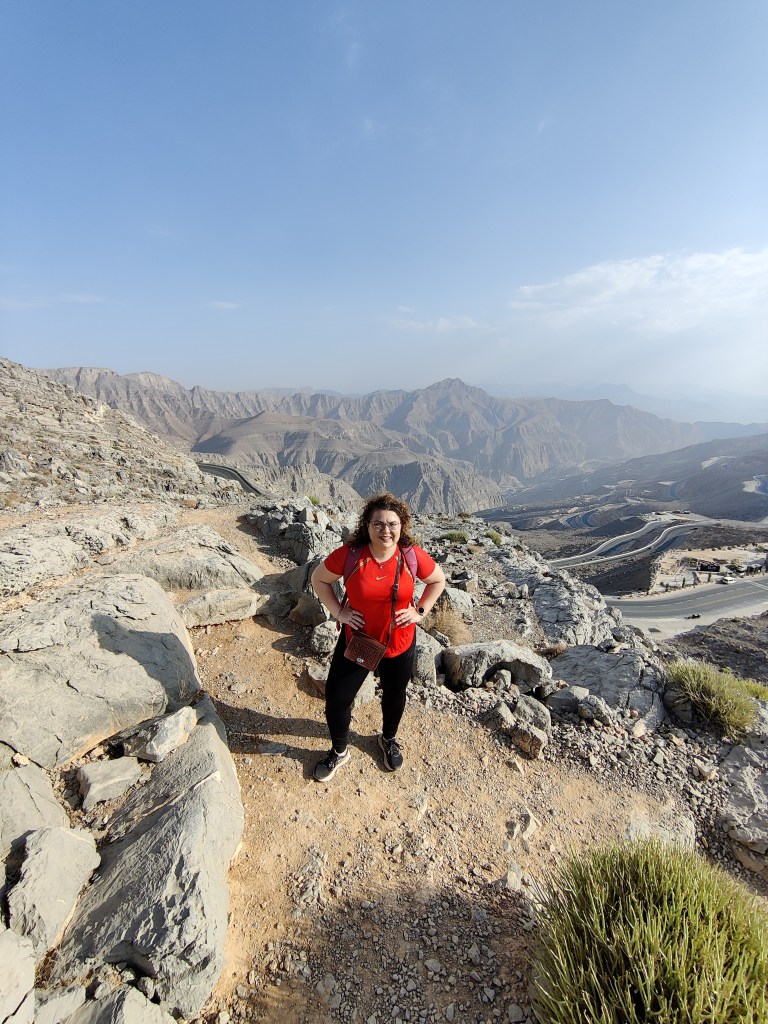
Upper Hiking Trail
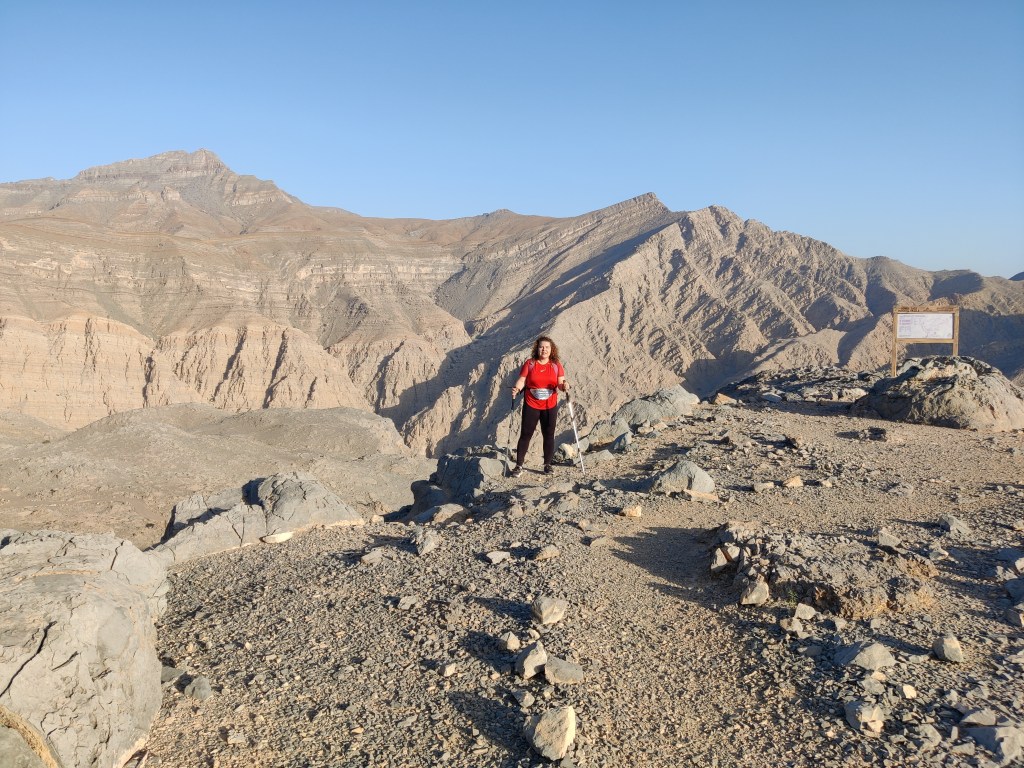
Our first adventure took us to the Upper Hiking Trail, offering an unforgettable journey through stunning mountain scenery. This trail ascends high above the peaks, providing incredible views of the surrounding mountains and the Ras Al Khaimah coast below. The hike was intriguing, with each step revealing more of the breathtaking landscape.
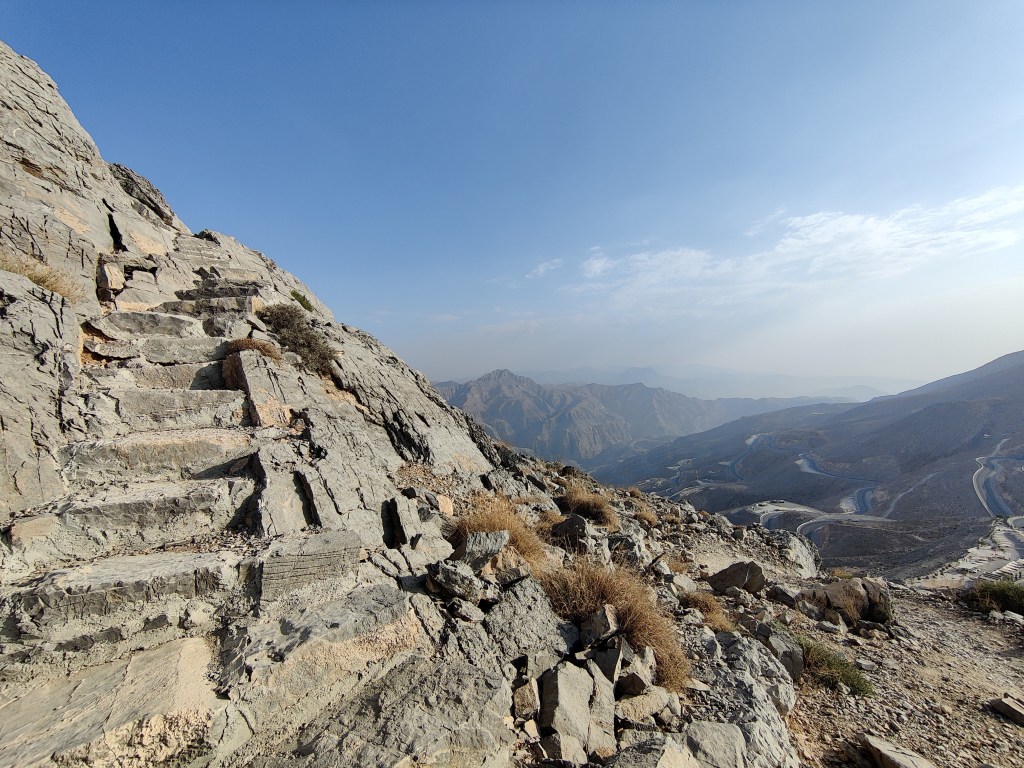
As we hiked along the mountain ridge, we could see the vast expanse of rugged terrain stretching out beneath us. The air is pure, and the feeling of being on top of the world was exhilarating. Our path eventually led us to the Jebel Jais Sledder, where we were entertained by the happy and terrified screams of people enjoying their thrilling ride down the hill. There is also a nice restaurant called 1484 by Puro at the top next to the sledder that offers a hearty meal with an incredible view, but that day we had other plans for dinner.
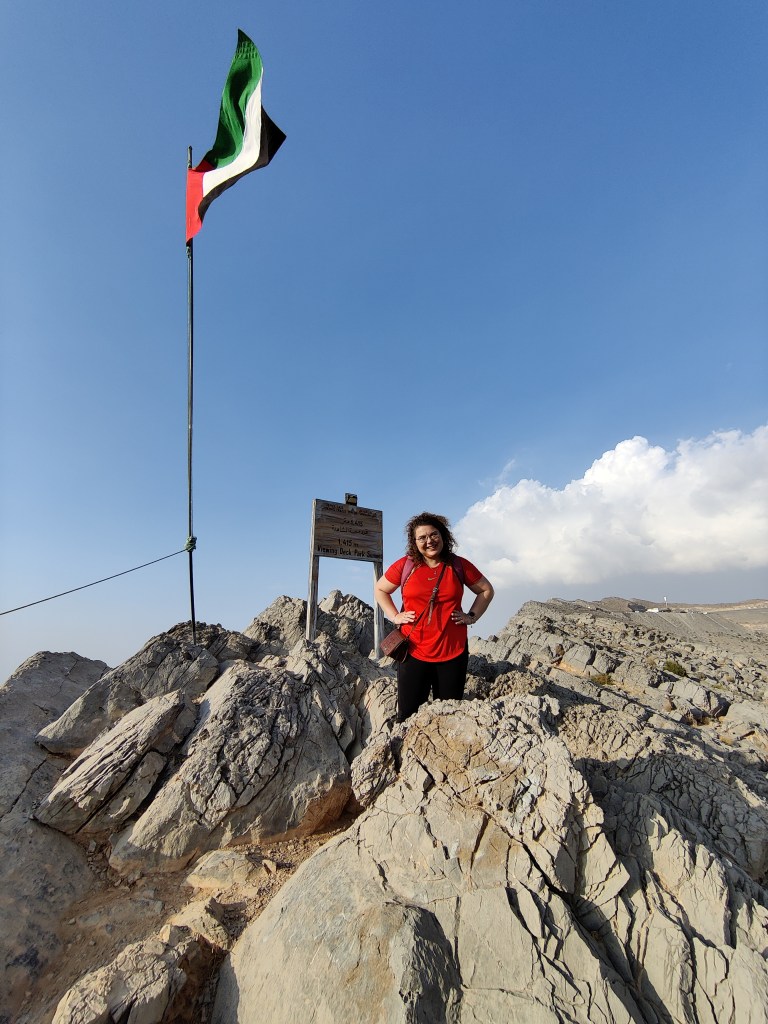
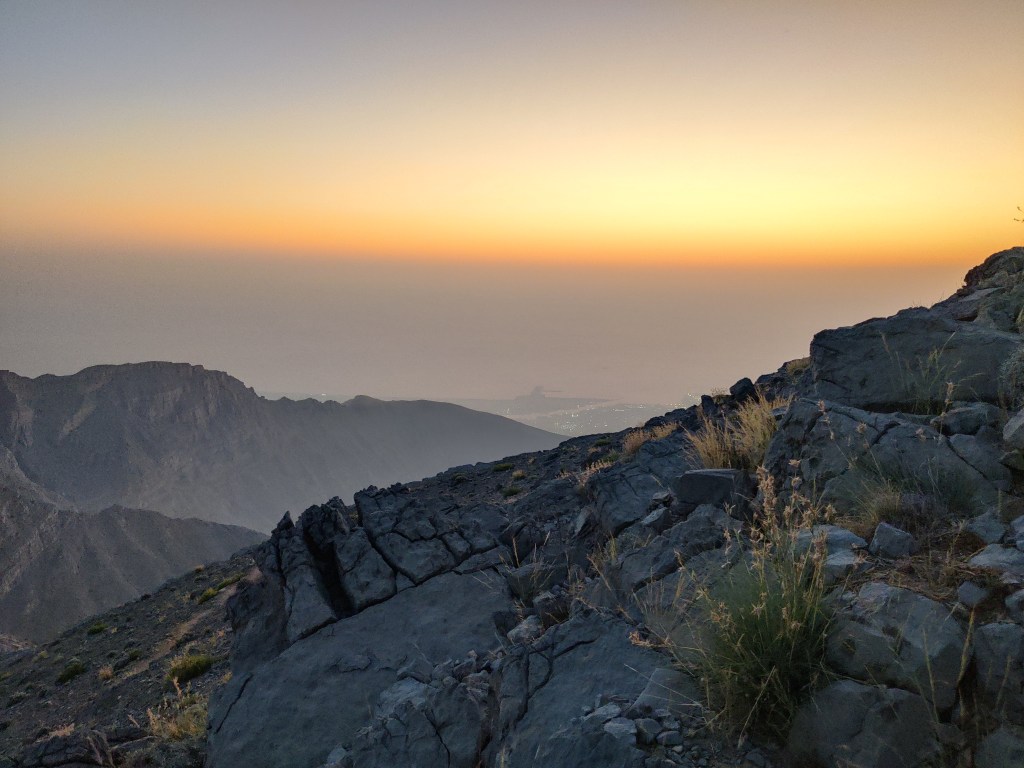
We had planned to continue further, but as dusk approached, we decided to descend. The descent next to the mountain road was equally scenic, with the setting sun casting a golden glow over the colorful mountains as well as friendly goats greeting us with a curious gaze.

Lower Hiking Trail
Our second hike took us to the Jebel Jais Lower Hiking Trail, a loop trail that offers just as much beauty and adventure as the first. This trail also features incredible views and good elevation, taking us through a variety of terrains.
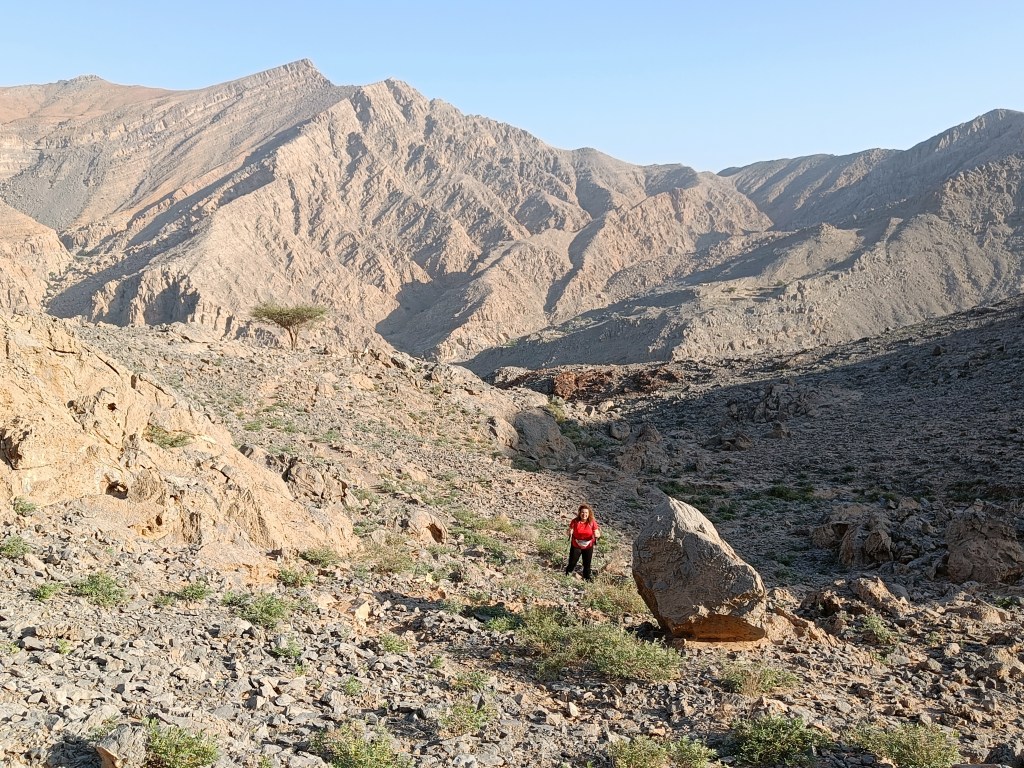
We passed by beautiful wadis, their dry riverbeds winding through the landscape, and stumbled upon the ruins of ancient villages, silent witnesses to the region’s rich history. The sense of walking through places that were once someone’s home added a layer of mystery and fascination to our hike.
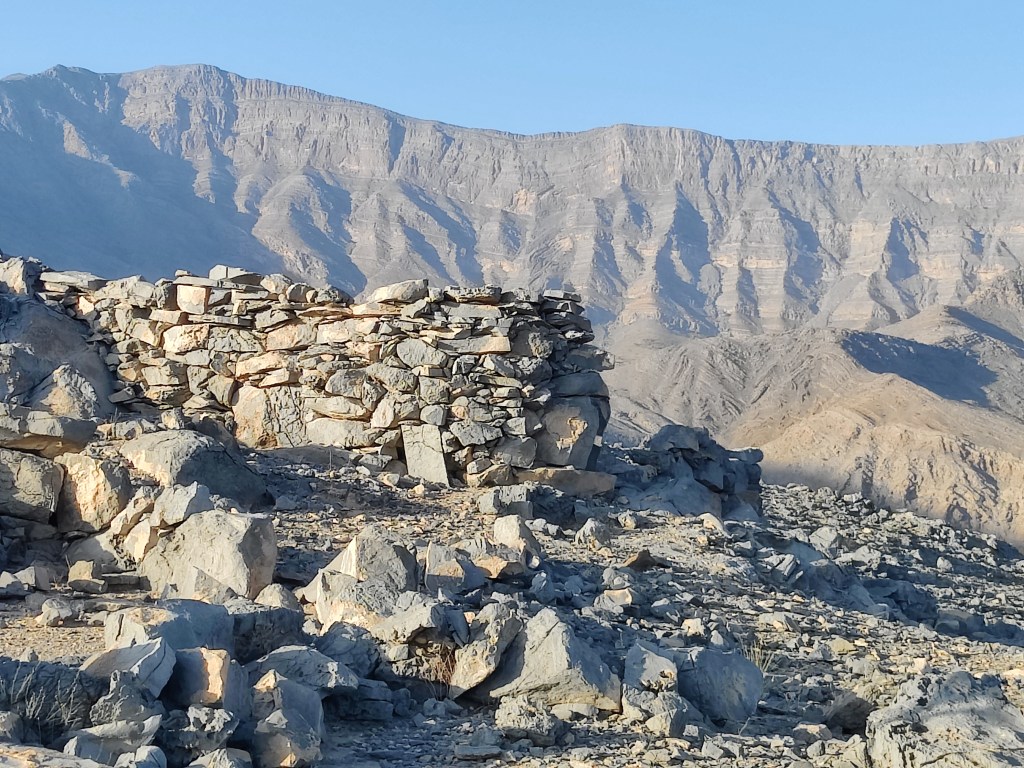
A highlight of this trail was passing by a local farm. We were warmly greeted by a friendly farmer and his adorable goats, who curiously approached us, wondering who the visitors were. It was a charming and unexpected encounter that added a personal touch to our journey.

Why should you add these trails to your list?
Both hikes at Jebel Jais offer unique and memorable experiences, each with its own set of highlights. From the high-altitude panoramic views of the Upper Hiking Trail to the historical and pastoral charm of the Lower Hiking Trail, Jebel Jais never fails to impress. If you’re looking for diverse hiking adventures with stunning views, geological wonders, and a touch of local culture, Jebel Jais should definitely be on your list. And bear in mind that there are many hiking trails in the area so you can always adjust the trail according to the time you have and your energy levels.
Wikiloc links:
Distance: 6,84km, Elevation gain: 362m, Difficulty: Medium, Max elevation: 801m
Distance: 6,91km, Elevation gain: 444m, Difficulty: Medium, Max elevation: 1516m
Want to know more?
Jebel Jais is a mountain in the North-Western Hajar range, located in the Ras Al Khaimah, UAE, and Musandam Governorate of Oman. The summit, with an elevation of 1,934 m (6,345 ft), is on the Omani side. The highest point in the UAE is a peak called Jabal ar Rahrah, which reaches an elevation of 1,892 m (6,207 ft) above sea level. Jebel Jais is also home to Jais Flight, the world’s longest zipline, providing an exhilarating experience for adventure enthusiasts.
Jebel Jais has a paved road that leads all the way to the top, offering several hairpin turns and stunning views of the surrounding landscape. The road has two lanes going up and one lane coming down, making it convenient for visitors to access the top of the mountain. Remember to use low gears to control your speed and avoid overheating your brakes when driving downhill!
For more detailed information, you can visit the Wikipedia page for Jebel Jais and Visit Jebel Jais.

 Voyagerista