Many people think that Dubai and the UAE as a whole have no past, that everything here is new and modern. But that couldn’t be further from the truth. My passion has always been to discover this hidden past and share it with my audience to uncover the layers of history, culture, and human stories that shaped this land long before its skyscrapers rose.
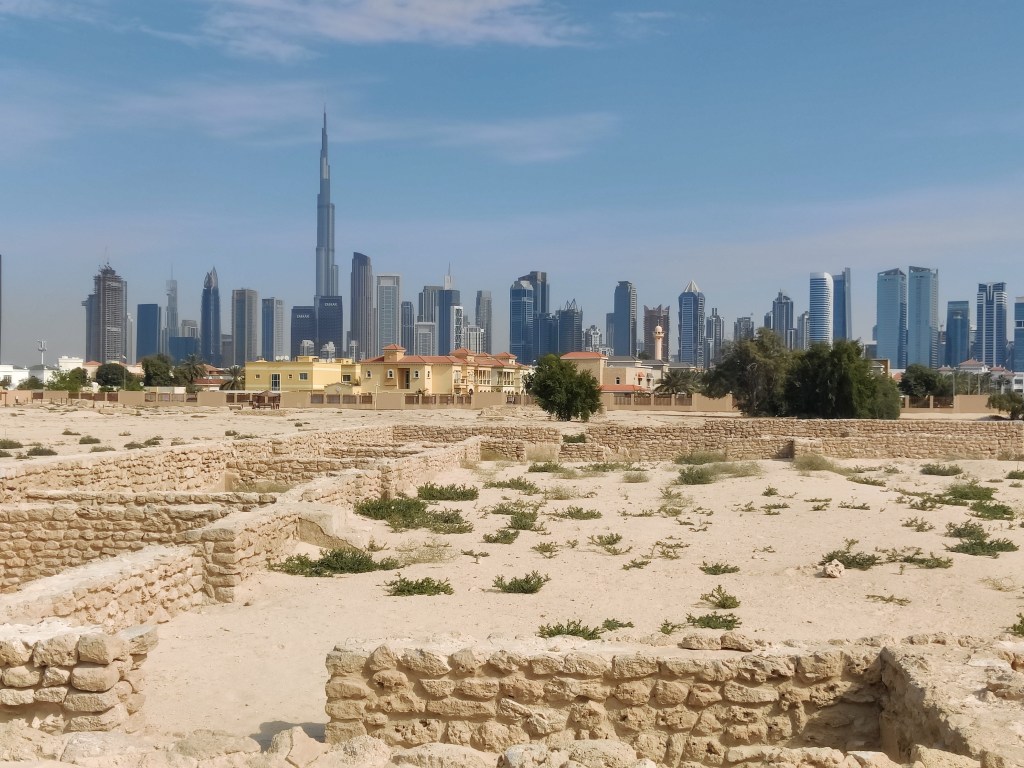
That’s exactly what I felt when I visited the Jumeirah Archaeological Site, hidden in plain sight right in the middle of the city. It’s a place that quietly tells the story of Dubai’s roots and how a thriving community once lived, traded, and prayed here more than a thousand years ago.
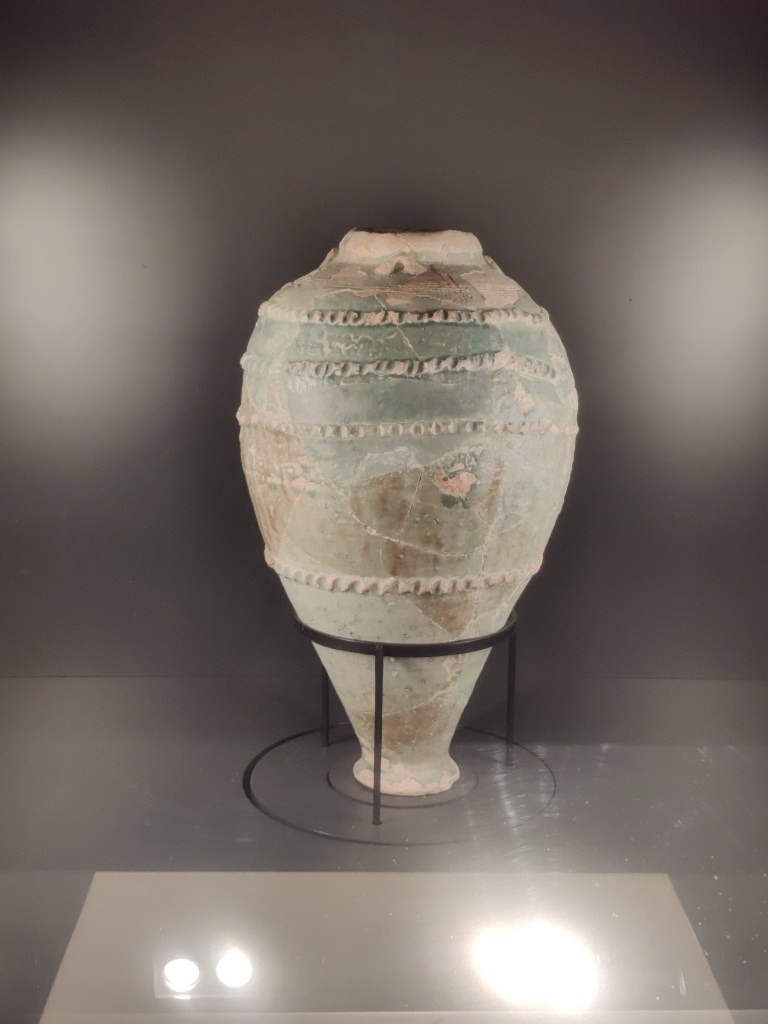
This settlement dates back to the 10th-11th11th century and belongs to the period of Abbasid Caliphate. It’s astonishing to realize that already then there was a flourishing settlement and an important stop on trade routes connecting Mesopotamia (modern day Iraq), Oman and India with the Arabian Peninsula. Long before Dubai became a global city, it was already a crossroads of cultures and commerce.
Walking Through the Past
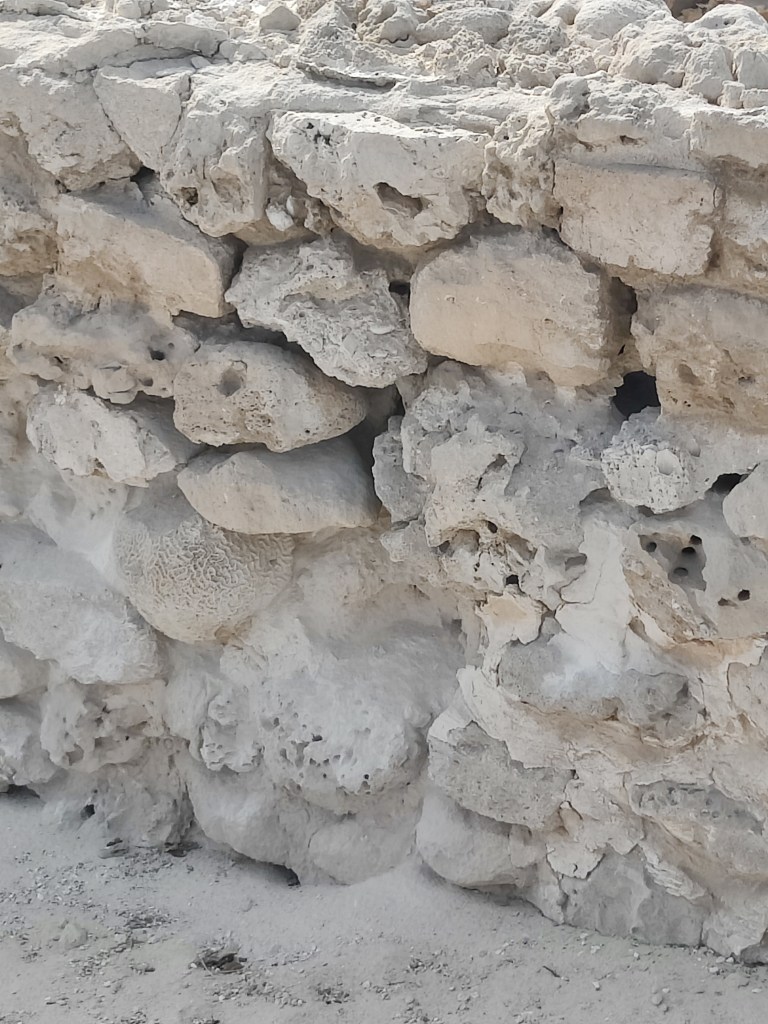
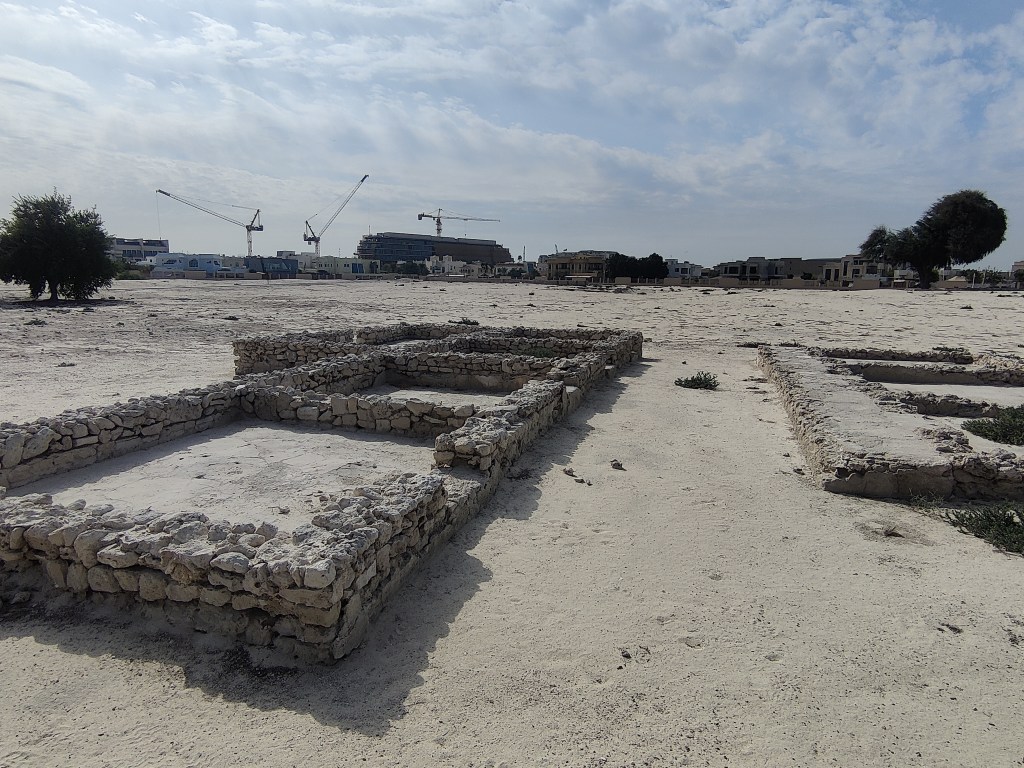
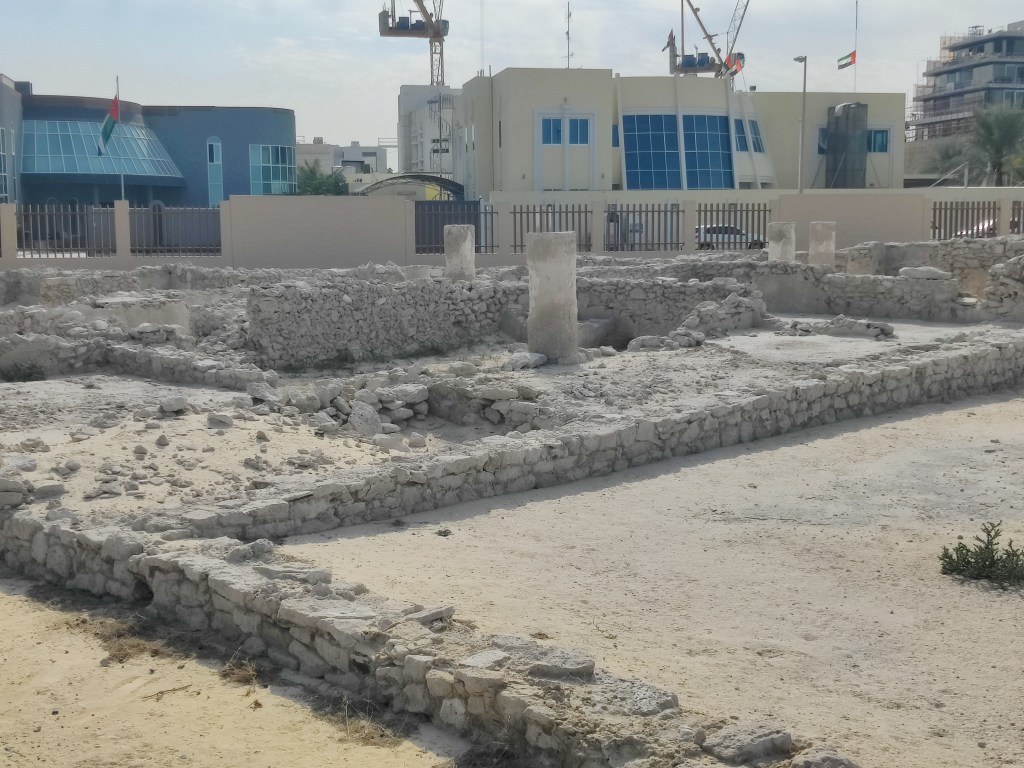
Stepping into the site feels like entering a time capsule. The remains of houses, a mosque, a souk, a caravanserai (rest house), and several other buildings still outline the shape of an organized town. The houses were built from sandstone, coral stone, fixed with gypsum, and then plastered resulting in architecture that speaks of resourcefulness and adaptation to the desert climate.
As I wandered through the sandy paths, the walls seemed to whisper stories of family life, traders’ conversations, and prayers rising in the stillness of early mornings.
The Mosque: Faith at the Center of the Settlement
One of the most moving discoveries here is the mosque, which served as the spiritual heart of the community. Archaeologists uncovered its mihrab that is the prayer niche that points toward Mecca along with the foundations of the prayer hall. Though time has softened its outlines, you can still feel the sacred energy that once filled this space.

The mosque was modest in size, reflecting the small community that lived here, but beautifully aligned and crafted with the same coral stone and plaster as the surrounding homes. I can just imagine how the same prayers echoed here a thousand years ago offering concrete proof that faith has always been central to life in this land.
The Souk: Dubai’s Ancient Marketplace
The souk is one of the liveliest parts of the site to picture. Archaeologists uncovered a series of shops and storage rooms lining narrow alleys, forming what must have been a bustling market. Objects found here like pottery, silver coins, jewelry and artefacts made of copper, glass and stone reveal how connected this community was to the wider world.
I could almost imagine the clinking of metalwork, the scent of spices, and the voices of traders calling out prices. In that moment, it struck me how Dubai’s trading spirit hasn’t changed, it’s simply evolved. The energy of those early merchants still pulses through the city today.
Building No. 6: The Grand Residence
The most striking structure on the site is Building No. 6, believed to have been a grand house belonging to a wealthy merchant or local leader. With its large central courtyard and surrounding rooms, the layout feels elegant and functional. This building features arches, columns and decorative stucco friezes with geometrical and floral patterns, reflecting the refined Abbasid architectural style.
The Caravanserai: A Rest Stop for Travelers
Not far from the main settlement lies the caravanserai, which once offered rest to travelers and merchants journeying along trade routes. Here, weary traders would share stories, food, and goods before continuing across the desert.

It’s a beautiful reminder that Dubai has always been a place to welcome a bridge between worlds. That spirit of hospitality and openness is something that continues to define the city today. On that note, the old name of Dubai was actually Al Wasl meaning connection in Arabic, reinforcing the role of the settlement as a hub for trade routes.
Why This Place Matters
The Jumeirah Archaeological Site is one of Dubai’s most meaningful hidden gems. It tells a story of connection between faith, trade, and community that has shaped the city for over a thousand years.
Preserved under the care of Dubai Municipality, the site offers a quiet, reflective experience far from the city’s busy rhythm. It’s a place where history isn’t just studied, it’s felt.
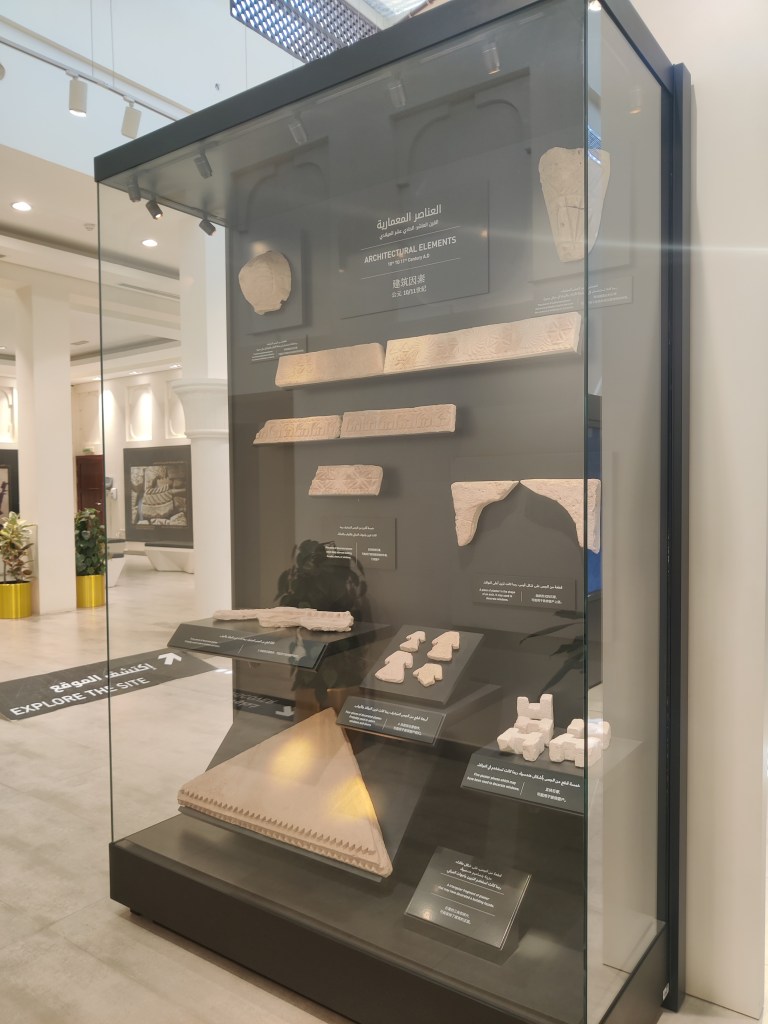
Bring water, a hat, and your curiosity. The site is open-air and peaceful, perfect for wandering. The site also has a modern and air conditioned visitor center with displays of archeological artefacts and an educational video.

Pair your visit with the Etihad Museum or the Al Shindagha Museum for a full journey through Dubai’s history — from its ancient roots to its modern transformation.
And as you leave, take one last look at the ruins. Between the skyscrapers and the sands, they remind you that Dubai’s story began long before the skyline in the hands and hearts of traders, travelers, and dreamers.

 Voyagerista